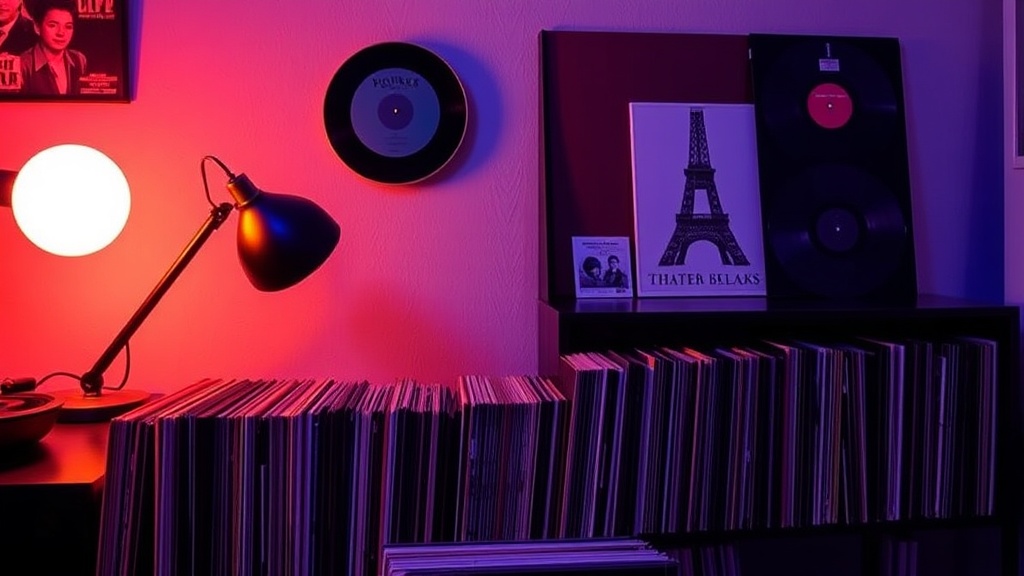
How to Store and Display Your Vinyl Record Collection Like a Pro

This post covers the practical steps for storing and displaying vinyl records so they stay in top condition for decades. Whether you've got fifty albums or five hundred, the right storage setup protects your investment, prevents warping and sleeve wear, and makes your collection something you'll actually want to show off. Poor storage is one of the fastest ways to destroy resale value and degrade sound quality. Here's what you need to know.
What's the best way to store vinyl records without damaging them?
Records should always be stored vertically—never flat—inside protective sleeves, away from heat sources and direct sunlight. Stacking records horizontally puts pressure on the jackets and vinyl itself, which leads to warped discs and ring wear on the covers. Vertical storage distributes weight evenly along the edge, provided the records aren't packed so tightly that removing an album requires force.
Here's the thing: temperature and humidity matter just as much as orientation. The ideal environment sits between 65°F and 70°F with relative humidity around 40% to 50%. Basements and attics are usually terrible choices. (Condensation in a damp basement can mold sleeves within weeks.) Heat sources like radiators, vents, and direct sun through south-facing windows will warp vinyl faster than you'd think. The Library of Congress preservation guidelines recommend stable, climate-controlled spaces for all analog media—and that advice applies just as much to a bedroom in Kelowna as it does to a national archive.
Sleeves are your first line of defense. Replace thin paper inner sleeves with high-quality polyethylene or rice-paper lined options like MoFi Master Sleeves or Big Fudge inners. They reduce static buildup and prevent paper scuffing on the vinyl surface. Outer sleeves—Big Fudge 3LP resealable sleeves are a popular pick—protect album art from edge wear, spills, and dust. Don't seal records airtight for years, though; a little air circulation prevents trapped moisture. For 7-inch singles, the same rules apply, though you'll need smaller sleeves and dividers to keep them upright on full-size shelves.
How should records be displayed to prevent warping and sun damage?
Display records on sturdy shelves away from windows and heat vents, and never leave them leaning at an angle for long periods. Even a slight lean concentrates weight on one side of the jacket, which over months can create a warp in the vinyl. If a shelf isn't full, use heavy bookends to keep everything upright.
That said, displaying records is half the fun of collecting. Wall-mounted ledges and "now playing" stands let you feature album art without risking long-term damage. Just rotate what's on display every few days. Hudson Hi-Fi acrylic wall mounts look sharp and hold the sleeve securely, but they leave the record exposed to dust and UV light. For daily listening, a simple walnut or acrylic "now spinning" stand works well—just don't treat it as permanent storage.
Sunlight is the silent killer of displayed collections. UV rays fade cover art and heat the vinyl. If a collection sits near a window, blackout curtains or UV-filtering film are non-negotiable. (A sun-faded original pressing of Pink Floyd's "The Dark Side of the Moon" loses serious collector value.) Even indirect light causes slow fading over years. Worth noting: LED lighting is perfectly safe and won't heat or fade jackets, which is why most high-end record shops use LED strips inside cabinets.
Do vinyl records need to be cleaned before storing them?
Yes—dirt and oils pressed into the grooves during playback will cause permanent damage if records sit uncleaned for months or years. Every time a stylus tracks through dust, it grinds that debris into the groove walls. Over time, this creates surface noise that no amount of later cleaning can fully fix.
The catch? A quick wipe with a dry cloth isn't enough. For light maintenance before and after each play, a carbon fiber brush like the Audio-Technica AT6012a removes surface dust. But for records heading back onto the shelf after a listening session, a wet-cleaning system is the gold standard. The Spin-Clean Record Washer MKII is affordable, manual, and effective for casual collectors. For larger collections, the Pro-Ject VC-S3 vacuum cleaning machine dries records in seconds and pulls grime out of the grooves mechanically. Both use specialized fluid—never substitute tap water, which leaves mineral deposits.
Clean records should slide into fresh inner sleeves before shelving. Storing a cleaned record in its original gritty paper sleeve is like washing your car and driving it through mud immediately after. Make cleaning part of the routine, not a once-a-year chore.
What shelving works best for a growing record collection?
Cube storage with 13-inch compartments—like the IKEA KALLAX—offers the best balance of capacity, stability, and price for most collectors. Each cube holds roughly 50 to 65 LPs depending on sleeve thickness and gatefolds, meaning a 4x4 KALLAX unit can house over 1,000 records. The exterior dimensions fit comfortably in apartments, basements, and dedicated listening rooms.
That said, KALLAX shelves are made of particleboard. Overstuffing a cube—cramming in 80 records—will eventually cause sagging. For collectors who want furniture that outlasts the collection itself, custom solid-wood cabinets from makers like Symbol Audio or local cabinet shops in Kelowna offer birch or maple constructions built to exact dimensions. They're expensive, but they won't bow under weight and they look far better in a living room.
| Storage Method | Best For | Pros | Cons |
|---|---|---|---|
| IKEA KALLAX Cube Shelf | Collections of 200–1,000+ records | Affordable, widely available, perfect 13" depth | Particleboard; can sag when overstuffed |
| Wall-Mounted Record Ledges | Highlighting 5–10 favorites | Saves floor space, visual focus | Exposes jackets to dust and UV light |
| Metal Industrial Shelving | Offices, basements, large collections | High weight limit, adjustable shelves | Too deep (often 15"+); utilitarian look |
| Custom Solid-Wood Cabinets | High-end collectors and retailers | Durable, beautiful, exact sizing | Expensive; long lead times |
Heavy collections need to be anchored. A fully loaded KALLAX 4x4 can weigh over 300 pounds, but tall shelving units still pose a tipping risk—especially in homes with kids or earthquakes. Wall anchors are cheap insurance. Also, leave a little breathing room in each cube. Cramming every slot to capacity makes browsing a hassle and increases pressure on outer jackets.
How do you protect records during moves or reorganizing?
Moving boxes should hold records vertically, spine-up, with no extra space for them to tip over. U-Haul's small moving boxes (16"x12"x12") fit LPs almost perfectly when packed snugly. Never use large boxes—a fully packed large box of vinyl can exceed 70 pounds and the records at the bottom will get crushed. Bubble wrap or packing paper fills gaps, but don't let paper touch bare vinyl. The Northeast Document Conservation Center emphasizes that physical shock and temperature swings during transit are major causes of permanent damage.
For collectors who buy and sell regularly, keeping a detailed inventory prevents double-buying and helps track condition. Apps like Discogs (backed by the massive Discogs marketplace database) let you log storage location, cleaning dates, and sleeve condition. It's a small habit that pays off when you're digging through 800 records looking for that one Japanese pressing you bought last spring.
There's no single "right" way to build a record room. Some collectors prefer minimalist white shelves and hidden storage; others want floor-to-ceiling walls of colored vinyl under warm LED strips. The common thread among collectors who keep their records pristine is simple: vertical storage, climate control, quality sleeves, and regular cleaning. Ignore any one of those four pillars, and you're gambling with the longevity of your collection. Start with the shelves you've got, upgrade the sleeves, and build from there. Your records—and your future self—will thank you.