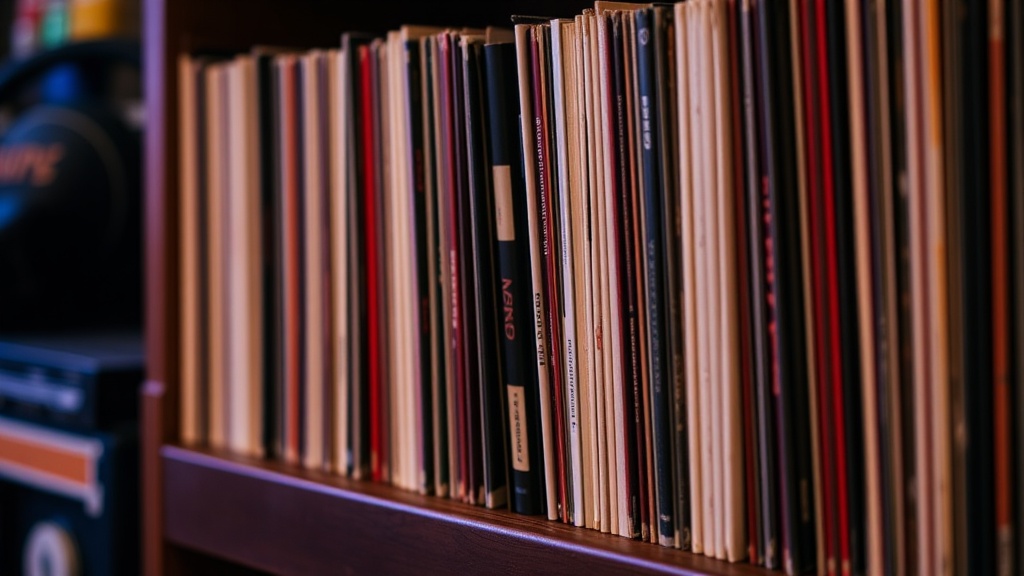
Store Your Vinyl Records Vertically to Prevent Warping

Quick Tip
Always store your vinyl records vertically like books on a shelf, never stack them horizontally, to prevent warping and sleeve damage over time.
Why Does Vertical Storage Matter for Vinyl Records?
Stacking records flat warps them. Warped vinyl doesn't play right—the needle skips, the sound distorts, and that $50 original pressing becomes a coaster. Vertical storage keeps records flat (ironically) by distributing weight evenly along the edge, not across the surface. This post covers the mechanics of record warping, how to store your collection properly, and what to do if damage has already started.
What Causes Vinyl Records to Warp?
Heat and pressure are the main culprits. When records lie flat under a stack of other records—or worse, under a pile of books—the weight creates uneven pressure across the grooves. Add warmth from a nearby radiator, sunlight through a window, or just a hot room, and the vinyl softens. It bends. It warps.
Here's the thing: vinyl isn't as rigid as it looks. At around 140°F (60°C), it starts to deform. Even at lower temperatures—say, 80°F in a sunny room—sustained pressure will cause slow, permanent damage. The catch? You won't notice until you drop the needle and hear the telltale wow and flutter.
"I've seen collections destroyed by nothing more than poor shelving and a south-facing window. Heat is silent. Pressure is patient. Together, they're deadly." — Orion Park, Rare Vinyl
How Should You Store Vinyl Records?
Vertically. Always vertically. Records belong on shelves like books—upright, supported, with enough space to slide in and out without force. The spine (the edge with the label) bears the weight. The playing surface stays untouched.
Worth noting: tight packing is just as bad as loose stacking. Records squeezed together create pressure points on the outer edges. They need breathing room—about 1/4 inch of wiggle room between groups. Think library, not sardine can.
Storage solutions vary. Here's how common options compare:
| Storage Type | Best For | Price Range | Notes |
|---|---|---|---|
| IKEA KALLAX shelving | Collections under 500 records | $60–$90 | Perfect cube dimensions; widely used |
| Record Storage Alternatives crates | Portable stacks, 50–100 records | $25–$40 | Built for 12" vinyl; stackable |
| Line Phono stands | Active listening setups | $150–$300 | Designed by DJs; holds player + records |
| Custom built-ins | Serious collectors (1000+) | $500+ | Adjustable shelves; climate control options |
The KALLAX works because it's 13 inches square—exactly right for records in outer sleeves. No wasted space. No awkward overhang. That said, any sturdy shelf with vertical support and proper depth (at least 12.5 inches) will do.
Can You Fix a Warped Record?
Sometimes—if the warp is mild. Methods exist, but none are guaranteed. The safest approach uses gentle, even heat and pressure over time. Some collectors use the Vinyl Flat paired with Groovy Pouch heating pads—purpose-built for this exact problem. Results vary based on warp severity and vinyl thickness.
Flat, slow heating (never a hair dryer or oven) can relax the plastic molecules. The Vinyl Flat applies even pressure across the entire surface—not just the edges—while the Groovy Pouch warms the record to about 135°F over several hours. Cooldown happens slowly. Rush it, and you'll create new warps.
Prevention beats repair every time. Store records vertically. Keep them away from heat sources. Use sturdy, appropriately sized shelving. Your collection—and your ears—will thank you.