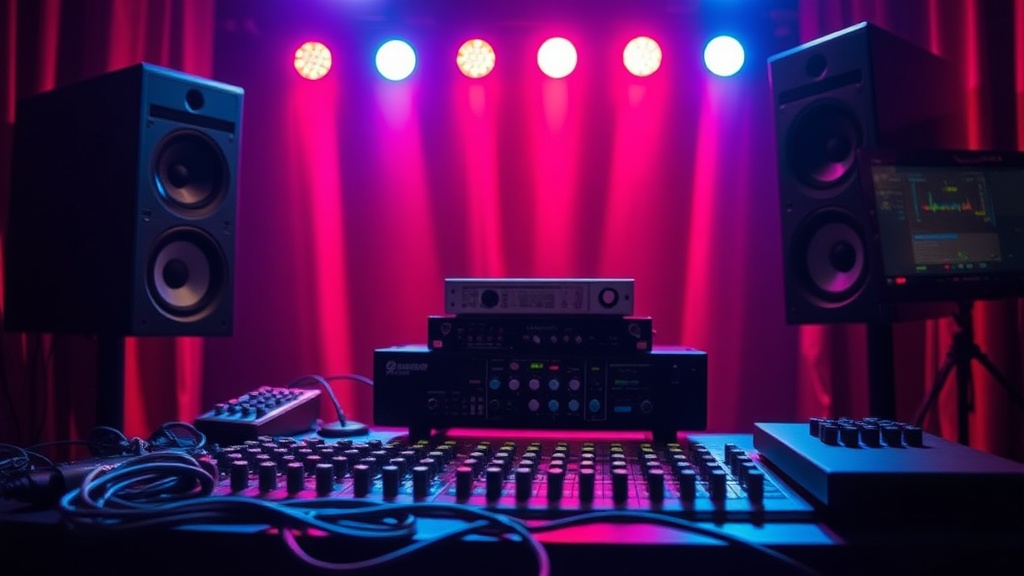
Why Expensive Audio Gear Doesn't Guarantee Better Sound

The Myth of the High-End Price Tag
Many new collectors believe that a high price tag is a direct proxy for audio fidelity. They assume that if a piece of equipment costs three times more than its competitor, the listening experience will be three times better. This is a common misconception. While high-end gear often utilizes superior materials, the reality is that a mediocre setup with expensive components will still sound mediocre. Sound quality isn't just about the hardware; it's about the synergy between your source, your playback device, and your room acoustics.
The pursuit of high-fidelity audio often leads people down a rabbit hole of unnecessary spending. You might find yourself chasing a specific brand of interconnect cables or a boutique power strip, thinking these will fix a dull-sounding system. Often, the bottleneck isn't the cable—it's the turntable's motor or a poorly matched cartridge. If your stylus is worn or your record is heavily scratched, no amount of expensive amplification will conjure clarity out of the chaos.
Can a Cheap Turntable Sound Good?
The short answer is yes. You don't need a setup that costs as much as a used car to enjoy your collection. A well-tuned, mid-range turntable can outperform an expensive, poorly configured one every single time. The key lies in the fundamentals: tracking force, anti-skate, and vibration isolation. If your tonearm isn't balanced correctly, even a thousand-dollar cartridge will sound thin and harsh.
Consider the basic physics of a record player. The stylus must follow a microscopic groove with extreme precision. If the weight is too light, the needle bounces; if it's too heavy, it digs into the wax. This mechanical relationship is far more significant than the aesthetic of the platter or the color of the dust cover. Before you spend a dime on a new piece of gear, ensure your current setup is properly calibrated. Check your leveling and make-sure your surface is stable. A vibration from a nearby refrigerator or a heavy footstep can ruin a playback session more effectively than a cheap preamp ever could.
Does High-End Audio Equipment Actually Provide Better Detail?
There is a legitimate difference in how high-end components handle signal-to-noise ratios and harmonic distortion, but it isn't always a "night and day" difference. The jump from a budget setup to a mid-tier system is usually massive. However, the jump from high-end to ultra-high-end is often diminishing returns. You are paying for the last 5% of performance, which might require a perfectly trained ear to even notice.
One factor people often overlook is the source material itself. If you are listening to a poorly mastered digital file or a low-quality vinyl rip, the high-end components will simply play back that low quality with higher precision. You can't upscale a bad signal. For those interested in the technical side of how sound waves interact with hardware, the Sound on Web archives provide excellent deep dives into technical specifications. To understand the history of how these standards were set, looking into the Audiophile community discussions can offer a different perspective on what truly matters in a high-fidelity system.
"The best system is the one that makes you forget you are listening to a machine and makes you feel the music."
This isn't just a cliché. When a system is balanced, the hardware disappears. You stop thinking about the needle or the amplifier and start hearing the intention of the artist. If you are constantly thinking about the hum of your transformer or the slight wow and flutter of your motor, your system isn't optimized yet.
How Much Should You Spend on a First Setup?
Avoid the trap of buying everything at once. A common mistake is spending the entire budget on the turntable and then having nothing left for decent speakers. In the world of audio, the speakers are arguably the most important component in the chain. A great turntable paired with cheap, computer-grade speakers will result in a flat, lifeless experience.
Instead, follow a balanced approach. A solid rule of thumb for many collectors is to distribute the budget somewhat evenly across the source, the amplification, and the output. If you have $1,000, don't spend $800 on a turntable and $200 on everything else. You'll end up with a powerhouse of a source feeding a weak link. Build your system incrementally. Start with a decent entry-level setup, learn how to maintain it, and upgrade one piece at a time as your ears develop. This way, you'll actually understand what you are gaining with each upgrade.
Remember, the goal is the music, not the gear. A collector's true value lies in their ability to find and enjoy the sounds they love, regardless of whether they're playing through a vintage receiver or a modern high-fidelity stack. Don't let the obsession with gear become a distraction from the actual enjoyment of your vinyl collection.