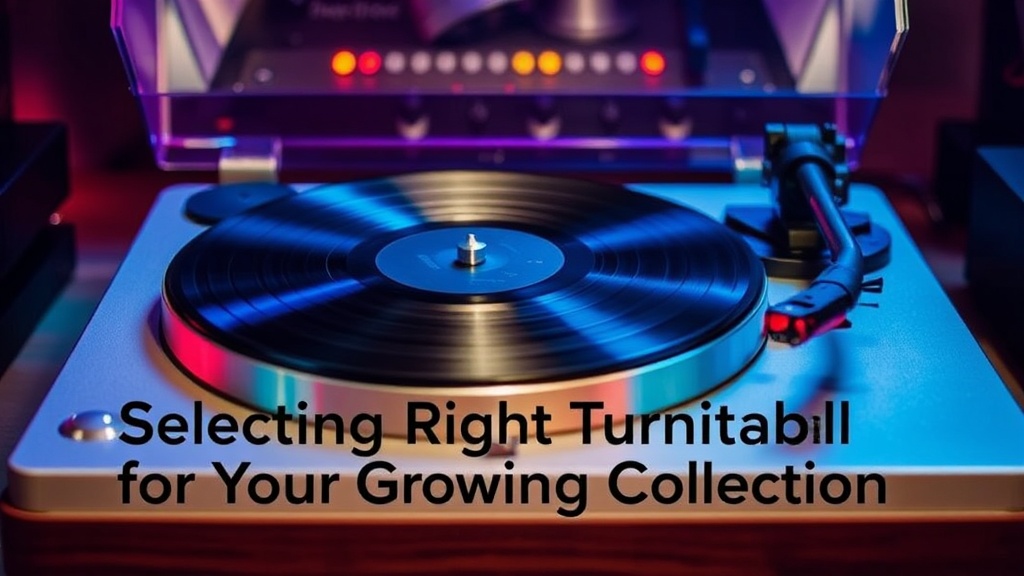
Selecting the Right Turntable for Your Growing Collection

Most new collectors assume that a more expensive turntable automatically produces better sound, but that's a mistake. A $3,000 deck won't fix a bad record, and a $200 player won't ruin a great one if it's set up correctly. This guide breaks down the mechanical components, the drive systems, and the budget tiers you actually need to consider to ensure your growing collection sounds the way it was intended.
The goal isn't to own the most expensive gear in the room. It's to find the machine that matches your listening habits and your physical space. You might be a casual listener who wants a "plug and certain" setup, or you might be an enthusiast looking to dive into high-fidelity playback. Either way, the technicalities matter.
What is the difference between belt drive and direct drive?
Belt drive turntables use a rubber belt to spin the platter, while direct drive systems connect the motor directly to the platter. This distinction affects everything from speed stability to how much vibration you'll experience during a session.
Belt drive systems are often favored by audiophiles because the motor is physically separated from the platter. This separation reduces motor noise and vibration—a design choice that helps maintain a clean signal. Brands like Pro-Ject and Regal frequently use this method. If you're looking for a steady, low-vibration experience for long listening sessions, belt drive is often the way to go.
Direct drive-ers, on the other hand, are usually looking for precision and torque. If you've ever seen a DJ using a Technics SL-1200, you're looking at the gold standard of direct drive. These motors start and stop almost instantly. They are incredibly durable and great for tactile interaction, though they can sometimes introduce more motor noise into the audio path if the build quality is low.
Here is a quick breakdown of the common drive types:
| Drive Type | Primary Benefit | Best For |
|---|---|---|
| Belt Drive | Reduced vibration/noise | Critical listening and high-fidelity music |
| Direct Drive | Consistent speed/torque | DJing, heavy use, and durability |
| Dual Drive | Versatility | Hybrid users (though rare in high-end) |
How much should I spend on a starter turntable?
A decent entry-level setup typically costs between $300 and $600, depending on whether you need a built-in phono preamp. While you can find "suitcase" players for $100, those are generally a bad investment for anyone who actually cares about the longevity of their records.
The problem with those cheap, battery-operated or suitcase-style players is the tracking force. They often use heavy, cheap cartridges that apply too much pressure to the grooves. This can actually cause permanent damage to your vinyl over time. If you are already learning how to identify first pressings, you definitely don't want to be playing them on a machine that will wear down the fine details of the way the record was pressed.
For a serious start, look at the Audio-Technica AT-LP120X. It's a solid, reliable piece of kit that offers a direct-drive motor and a decent cartridge. It’s a safe bet for someone who wants to grow into the hobby without buying something they'll outgrow in six months. If you want something more refined and "audiophile-lite," look at the Pro-Ject Debut series. These are much more focused on pure playback quality and less on the "DJ" aesthetic.
It’s worth noting that the turntable is only one part of the equation. Your speakers and your amplifier will dictate the final sound just as much as the platter does. Don't spend $2,000 on a turntable only to plug it into $20 computer speakers.
Does a built-in phono preamp matter?
A built-in phono preamp is a convenience feature that allows you to plug your turntable directly into powered speakers or a standard line-in input without needing an external amplifier. It doesn't necessarily make the sound "better," it just makes the setup easier.
If you are building a minimalist setup, a turntable with a built-in preamp is a lifesaver. It saves desk space and reduces the number of cables cluttering your room. However, if you plan on upgrading your gear later, you’ll eventually want a dedicated external phono stage. A dedicated stage provides a cleaner signal and more control over the sound profile.
Think of it this way: the built-in preamp is like a standard internal component, while an external one is a specialized upgrade. Most mid-range turntables, like those from Denon, offer a switch to turn the preamp on or off. This gives you the flexibility to start simple and upgrade your signal path as your collection grows.
When you're out hunting for more pieces, remember that your playback gear is just as important as the records themselves. If you're curious about the physical care of your discs, check out our guide on storing and protecting your vinyl collection. A great turntable won't help if your records are covered in dust or heat-warped.
Key Components to Check Before Buying
Before you pull the trigger on a purchase, make sure you aren't just buying a pretty box. Check these three things:
- Counterweight: Does it have an adjustable weight? You need this to set the correct tracking force so you don't gouge your records.
- Anti-Skate: This is a mechanism that prevents the tonearm from pulling too hard toward the center of the record. It’s a sign of a quality machine.
- Cartridge Type: Is the stylus replaceable? You don't want to have to throw away the whole turntable just because the needle wore out.
If a machine lacks an adjustable counterweight, skip it. It's a non-negotiable for anyone who wants to actually enjoy their music rather than just "playing" it. Even a budget-friendly model from a brand like Sony or Cambridge Audio will have these basics covered.
The world of analog audio can feel intimidating because of the jargon, but it really comes down to physics. You want a stable spinning platter, a steady motor, and a needle that sits lightly in the groove. Once you have those, the music handles itself. Whether you're listening to a pristine Japanese pressing or a well-loved thrift store find, the right machine makes all the difference. Go for quality over flashy features, and your ears will thank you.